

Sweet and mellow with a crunch like a kiwi fruit. Yum.


Nowadays i am using karisilankanni keerai in my cooking twice a week for health reasons. I make kootu and this chapathi.But i would say,we love this chapathi more than kootu ;) It is very easy to prepare.I make this for my hubby's lunch box. It stays soft and onion raita is the best accompaniment. I use the same method to prepare palak and other keerai chapathis.

INGREDIENTS
- Karisalankanni leaves- 1 bunch
- Wheat flour - 1 cup
- Besan flour - 1 tbsp
- Sambhar powder - 1 tsp
- Garam masala - 1/2 tsp
- Curd - 1/5 cup ( adjust)
- Olive oil - 1 tsp
- Salt -as needed
- water - As needed
METHOD

KITCHEN CLINIC
| Karisalankanni (Eclipta prostrata) is the herb of choice in treating liver diseases. This herb grows in marshy areas throughout the year. It grows abundantly during the rainy season. There are two varieties of karisilankanni, one has yellow flowers and the other white. The yellow one is more potent. Karisalankanni is most effective when eaten raw. It can also be dried in shade and powdered.
1. It is good for teeth, skin and hair.
|


I call this chutney as hotel chutney. I've already posted hotel white and red chutney. This is also the same as white chutney but i add little coriander leaves. U can combine mint & coriander leaves in equal ratio and try the same. It tastes great with idly.Let's go to the recipe..
INGREDIENTS
To temper:
|
METHOD
|
KITCHEN CLINIC
CORIANDER LEAVESThe Health Benefits of CilantroList of Cilantro Benefits:
Side Effects or Contraindications of Organic CilantroWhile many sources state that cilantro has little to no adverse side effects, there are some sources that warn that cilantro leaf should not be used during pregnancy, as it may lead to an increase chance of miscarriage in mothers, or may reduce chances of conception in women trying to become pregnant. If you are pregnant or breast-feeding, please consult with your health care provider before consuming cilantro in any form |


Its my long time wish to try this bonda. I very rarely make deep fried snacks especially bhajji & bonda . But my husband is fond of all these fried stuffs.So last weekend i made this bonda for my hubby.He loved it. I was very happy with the result.
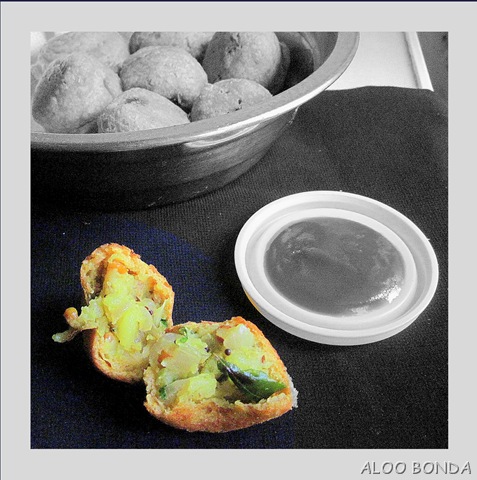
INGREDIENTS :
To temper :
To garnish
Lime juice - A few drops
METHOD :
Serve with tomato ketchup or coconut chutney !!

KITCHEN CLINIC :
| POTATO : Potatoes are a very popular food source. Unfortunately, most people eat potatoes in the form of greasy French fries or potato chips, and even baked potatoes are typically loaded down with fats such as butter, sour cream, melted cheese and bacon bits. Such treatment can make even baked potatoes a potential contributor to a heart attack. But take away the extra fat and deep frying, and a baked potato is an exceptionally healthful low calorie, high fiber food that offers significant protection against cardiovascular disease and cancer. Our food ranking system qualified potatoes as a very good source of vitamin C, a good source of vitamin B6, copper, potassium, manganese, and dietary fiber. Potatoes also contain a variety of phytonutrients that have antioxidant activity. Among these important health-promoting compounds are carotenoids, flavonoids, and caffeic acid, as well as unique tuber storage proteins, such as patatin, which exhibit activity against free radicals. Potatoes' Phytochemicals Rival Those in Broccoli Potatoes' reputation as a high-carb, white starch has removed them from the meals of many a weight-conscious eater, but this stereotype is due for a significant overhaul. A new analytical method developed by Agricultural Research Service plant geneticist Roy Navarre has identified 60 different kinds of phytochemicals and vitamins in the skins and flesh of 100 wild and commercially grown potatoes. Analysis of Red and Norkotah potatoes revealed that these spuds' phenolic content rivals that of broccoli, spinach and Brussels sprouts, and includes flavonoids with protective activity against cardiovascular disease, respiratory problems and certain cancers. Navarre's team also identified potatoes with high levels of vitamin C, folic acid, quercetin and kukoamines. These last compounds, which have blood pressure lowering potential, have only been found in one other plant, Lycium chinense (a.k.a., wolfberry/gogi berry). How much kukoamine is needed for a blood pressure lowering effect in humans must be assessed before it can be determined whether an average portion of potatoes delivers enough to impact cardiovascular health. Still, potatoes' phytochemical profiles show it's time to shed their starch-only image; spuds-baked, steamed or healthy sautéed but not fried-deserve a place in your healthy way of eating.'Phytochemical Profilers Investigate Potato Benefits,'Agricultural Research, September 2007 Blood-Pressure Lowering Potential UK scientists at the Institute for Food Research have identified blood pressure-lowering compounds called kukoamines in potatoes. Previously only found in Lycium chinense, an exotic herbal plant whose bark is used to make an infusion in Chinese herbal medicine, kukoamines were found in potatoes using a new type of research called metabolomics. Until now, when analyzing a plant's composition, scientists had to know what they were seeking and could typically look for 30 or so known compounds. Now, metabolomic techniques enable researchers to find the unexpected by analyzing the 100s or even 1000s of small molecules produced by an organism. 'Potatoes have been cultivated for thousands of years, and we thought traditional crops were pretty well understood,' said IFR food scientist Dr Fred Mellon, 'but this surprise finding shows that even the most familiar of foods might conceal a hoard of health-promoting chemicals.' Another good reason to center your diet around the World's Healthiest Foods! In addition to potatoes, researchers looked at tomatoes since they belong to the same plant family-Solanaceae-as Lycium chinense. Metabolomic assays also detected kukoamine compounds in tomatoes. The IFR scientists found higher levels of kukoamines and related compounds than some of the other compounds in potatoes that have a long history of scientific investigation. However, because they were previously only noted in Lycium chinense, kukoamines have been little studied. Researchers are now determining their stability during cooking and dose response (how much of these compounds are needed to impact health). Vitamin B6-Building Your Cells If only for its high concentration of vitamin B6-a cup of baked potato contains 21.0% of the daily value for this important nutrient-the potato earns high marks as a health-promoting food. Vitamin B6 is involved in more than 100 enzymatic reactions. Enzymes are proteins that help chemical reactions take place, so vitamin B6 is active virtually everywhere in the body. Many of the building blocks of protein, amino acids, require B6 for their synthesis, as do the nucleic acids used in the creation of our DNA. Because amino and nucleic acids are such critical parts of new cell formation, vitamin B6 is essential for the formation of virtually all new cells in the body. Heme (the protein center of our red blood cells) and phospholipids (cell membrane components that enable messaging between cells) also depend on vitamin B6 for their creation. Vitamin B6-Brain Cell and Nervous System Activity Vitamin B6 plays numerous roles in our nervous system, many of which involve neurological (brain cell) activity. B6 is necessary for the creation of amines, a type of messaging molecule or neurotransmitter that the nervous system relies on to transmit messages from one nerve to the next. Some of the amine-derived neurotransmitters that require vitamin B6 for their production are serotonin, a lack of which is linked to depression;melatonin, the hormone needed for a good night's sleep;epinephrine and norepinephrine, hormones that help us respond to stress; and GABA, which is needed for normal brain function. Vitamin B6-Cardiovascular Protection Vitamin B6 plays another critically important role in methylation, a chemical process in which methyl groups are transferred from one molecule to another. Many essential chemical events in the body are made possible by methylation, for example, genes can be switched on and turned off in this way. This is particularly important in cancer prevention since one of the genes that can be switched on and off is the tumor suppressor gene, p53. Another way that methylation helps prevent cancer is by attaching methyl groups to toxic substances to make them less toxic and encourage their elimination from the body. Methylation is also important to cardiovascular health. Methylation changes a potentially dangerous molecule called homocysteine into other, benign substances. Since homocysteine can directly damage blood vessel walls greatly increasing the progression of atherosclerosis, high homocysteine levels are associated with a significantly increased risk for heart attack and stroke. Eating foods rich in vitamin B6 can help keep homocysteine levels low. In addition, diets high in vitamin B6-rich foods are associated with overall lower rates of heart disease, even when homocysteine levels are normal, most likely because of all the other beneficial activities of this energetic B vitamin. A single baked potato will also provide you with 11.7% of the daily value for fiber, but remember the fiber in potatoes is mostly in their skin. If you want the cholesterol-lowering, colon cancer preventing, and bowel supportive effects of fiber, be sure to eat the potato's flavorful skin as well as its creamy center. Vitamin B6-Athletic Performance Vitamin B6 is also necessary for the breakdown of glycogen, the form in which sugar is stored in our muscle cells and liver, so this vitamin is a key player in athletic performance and endurance. |


Mostly we all make thenkuzhal for diwali or some special occasions. I love this murukku since my childhood days.I used to do all the pre preparatory works like buying rice and dal , grinding it in flour mill etc..I sit with my mom & paati when they make this for diwali especially for the last batch of murukku .. She makes half cooked murukku( we call it "arai vekkaadu" in tamil) . I love this murukku more than the crispy ones. I eat it hot immediately after taking out from the oil.Even today , my MIL made this specially for me..How sweet !! .I saw so many thenkuzhal recipes in web with different proportions of rice and urad dal . I want to share my version.I tried to take step by step pics for beginners. I really admire our fellow bloggers who blog recipes with step by step pics for each and every post. They have so much of patience and skill to do this. I really don't have both
  .For sweets and savouries step by step presentation is most essential i feel. Hope this post helps beginners. Feel free to leave ur comments about my presentation.I will improve in my further posts. Now coming to my version..
INGREDIENTS
|
"""PLEASE HAVE A LOOK AT THE "POINTS TO REMEMBER" BEFORE STARTING.."""
METHOD
Take the murukku press and mould with one whole.
Fill the dough and set aside.Heat the oil in a broad kadai and and press the murukku in circular motion directly in oil or press the murukku in a polythene sheet or in the back of ladle separately and then drop in hot oil. This way u get a nice shape. After u press the murukku , please stand a few feet away from the kadai.Sometimes , very rarely murukku may burst like seedai . If it doesn't burst, then proceed.
Cook for sometime.Flip and cook for some more time till the hiss sound and bubbles ceases . Do it in medium flame.Adjust the flame whenever needed.
Remove and drain in a paper towel..Store in an air tight container after it cools down.
Don't forget to try the half cooked murukku in the last batch. For this after u drop the murukku in oil , just flip immediately and remove in 10 secs.. Eat it hot !! White colored , crispy thenkuzhal is ready to enjoy !! |
Points to remember
|
Can u see the hole . Catch u in my next post. Bye. Have a gr8 weekend 


I learnt this from my MIL. Usually we make this gravy only with drumstick. But during mango season , we make this combination. It tastes great with the excellent flavor of mango. If u don't get sour raw mango ,no problem , u can try this with drumstick alone by adding little tamarind extract to get the tangy taste. We mix this gravy in plain rice with little ghee.Here i've used Vengaaya vadagam for seasoning.I think most of u may not have/aware of this. So i've given the ingredients below to replace vadagam.
Try this simple & delicious poricha kuzhambu. Iam sure u'll love it and start to make it often.

INGREDIENTS
To grind:
To temper:( to replace vadagam)
METHOD:
ENJOY MIXNG WITH HOT PLAIN RICE & A DROP OF GHEE OR SERVE AS A SIDE DISH FOR VATRAL KUZHAMBU / SAMBHAR RICE.
KITCHEN CLINIC:
| DRUMSTICK All parts of drumstick tree are useful and have long been used for nutritional, medicinal, and industrial purposes. The drumstick pods or fruits are used as a vegetable in curries and soups and very popular in Indian food. Crushed drumstick leaves are used as a domestic cleaning agent; powdered seeds are used for clarifying honey and sugarcane juice, and for purifying water. Moringa seeds produce oil, also known as Ben oil, which is a sweet non-sticky oil that doesn't become rancid. This oil is used in salads, for lubricating machines, and in perfumes and hair-care products. Drumstick and HealthQuick FactsAlmost all parts of the drumstick tree have medicinal value. The small, round leaves are especially beneficial in treating many ailments because of their high iron content and many medicinal properties. Drumstick leaves can be eaten fresh, cooked, or stored as dried powder for many months without refrigeration, and reportedly without loss of nutritional value. Where starvation is imminent, consuming the drumstick-leaf powder can be life-saving. According to the Trees for Life organization, "ounce-for-ounce, Moringa leaves contain more Vitamin A than carrots, more calcium than milk, more iron than spinach, more Vitamin C than oranges, and more potassium than bananas," and that the protein quality of Moringa leaves rivals that of milk and eggs. Because of the high calcium, iron, and vitamins, drumstick leaves can be used as a wonderful tonic for infant and growing kids and teens to promote strong and healthy bones and for purifying the bloodstream. To prepare the tonic, drumstick leaves should be ground with water, filtered, and mixed with milk. Drumstick-leaf juice is also very beneficial for pregnant women as it can help them overcome sluggishness of the uterus, ease delivery, and reduce post-delivery complications. In India, drumstick leaves are boiled in water and salt, the water is drained, and the leaves are served with ghee (clarified butter) to lactating mothers to increase breast milk. Drumstick leaves are very useful in treating wheezing, asthma, bronchitis, and tuberculosis. A soup prepared by boiling a handful of leaves in 3/4 cup water for 5 minutes and cooled is served to those with respiratory problems. A little salt, pepper, and lime juice can be added to this soup. Drumstick has antibacterial properties and as such is very useful in preventing infections such as those of the throat, chest, and skin. Drumstick soup can be prepared from the leaves, flowers, and pods and used for this purpose as an antibiotic. Dried and powdered bark of the drumstick root can also be used for fungal skin infections. Drumstick leaves, flowers, and seeds are useful in treating sexual debility and weakness. A teaspoonful of fresh drumstick-leaf juice mixed with honey and a glass of tender coconut water taken 2-3 times a day is a wonderful remedy for digestive disorders like diarrhea, dysentery, colitis, jaundice, and cholera. Drumstick-leaf juice is also effective in treating urinary disorders such as excessive urination. Drumstick-seed oil is useful in treating conjunctivitis. Fresh drumstick-leaf juice mixed with lime juice can also be applied to treat pimples, acne, and blackheads. |


 karisalankanni is also a specific remedy for jaundice. It has a great medicinal value in the treatment of hair. Karisalankanni is said to protect against night blindness and other eye diseases probably because of its high carotene content.


